


Walker Books Australia
May 2022
ISBN13:9781760654719
Australia RRP:$18.99
New Zealand RRP:$20.99
- Message: Half of all the mental health conditions we experience at some point in our lives will have started by age 141
- Message: Over 75% of mental health problems occur before the age of 25. 3
- Message: One in seven young people aged 4 to 17 years experience a mental health condition in any given year.
- 13.9% of children and young people (aged 4 to 17 years) met the criteria for a diagnosis of a mental disorder in the last 12 months.4
- Message: One in ten young people aged 12-17 years old will self-harm, one in 13 will seriously consider a suicide attempt, and one in 40 will attempt suicide. 5
- 6.9% of children and young people (aged 4 to 17 years) had suffered from an anxiety disorder in the past 12 months 6
- Message: Young people are less likely than any other age group to seek professional help.
- Only 31% of young women and 13% of young men with mental health problems had sought any professional help.7
- Message: Major depressive disorders are more common in young people than children.
- The prevalence of major depressive disorder is higher in young people (12 to 17 years) than children (4 to 11 years) – 5% compared to 1.1%.8
- Message: Almost one-fifth of all young people aged 11 to 17 years experience high or very high levels of psychological distress.
- 19.9% of all young people (11 to 17 years) had high or very high levels of psychological distress in the previous 12 months, however for females aged 16 to 17 years and young people with major depressive disorder, this was significantly higher (36.2% and 80.7% respectively).9
- Message: One in ten young people aged 12 to 17 years have engaged in self-harm.
- About three quarters of these adolescents themselves in the previous 12 months.10
- Message: Suicide continues to be the leading cause of death for young Australians11
- In 2019, suicide accounted for two in five deaths among people aged 15-17 years (40 per cent) and more than one in three among those aged 18-24 years (36 per cent). This represents an increase of 25 per cent for both age groups over the last decade. Suicide remains the leading cause of death of children between 5 and 17 years, with 96 deaths occurring in this age group, at a rate of 2.4 deaths per 100,000 children. Eighty per cent of those deaths occur between the ages of 15 and 17 years, with a relatively even breakdown for males and females in this age category.
- On average, a person who died by suicide in 2019 lost 36.7 years from their life. Conditions such as coronary heart disease account for more premature deaths than suicide, but fewer years of potential life lost.
- Message: The rate of suicide among Indigenous young people is significantly higher than among non-Indigenous young people12
- Over the five years from 2015 to 2019, one third (32.4 per cent) of all First Nations Peoples child deaths occurred due to suicide. The age-specific death rate was 8.3 deaths per 100,000 First Nations Peoples children, compared to 2.1 per 100,000 for non-Indigenous children.
- Between 2015 and 2019, suicide was the leading cause of death for First Nations Peoples children and young people, at a rate three times higher than non-Indigenous people. Children aged 15-17 accounted for 80 per cent of all child suicides, with males and females each accounting for approximately half of all child suicide deaths. [https://www.beyondblue.org.au/media/statistics]
Thankfully, there is an ever-growing awareness around mental health, and a wider knowledge of help sources available. We have media focus both in information sharing, and valuable help agencies that did not exist years ago. The stats above provide some insight into the extent of these health issues impacting our young people. Yet it can be easy to dismiss signs and symptoms.
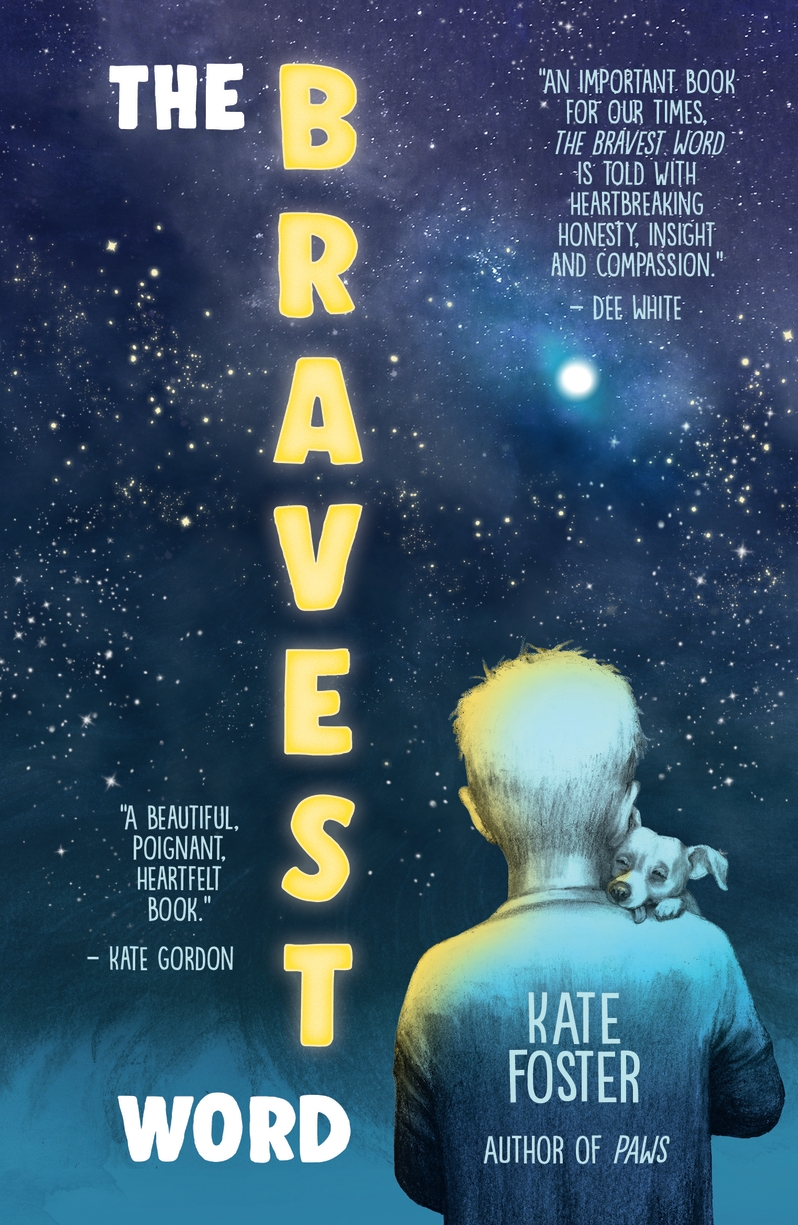
Protagonist Matthew is almost 12 and just started high school, and is exhibiting many of the recognisable signs of depression: loss of enjoyment in his social circle, and sport, choosing to isolate himself, lethargic and sleeping lots, quickly losing his temper and even quicker to shed tears, and complete lack of motivation in schoolwork. He knows something is wrong with himself but is going down a path of self-loathing feeling ‘useless’ and a terrible person. He feels guilty that he is seemingly not appreciative of a good family and life. His situation is rapidly escalating, and he is hesitant to broach any discussion with his parents, despite his father’s obvious sense that there is something bothering him (interestingly, his mother is the parent who is the less emotionally unavailable in this dynamic – arguably, because in her upbringing she had to be tough).
Just as Matthew is close to unburdening himself to his father during a quiet walk in the park, they come across an abandoned and cruelly neglected little dog. Matt’s connection with little Cliff (named after his recently deceased grandfather) is immediate, and is the first real sensation of happiness the boy has experienced for a long time.
Cliff’s journey to recovery and rescue parallels Matt’s revelations to first his dad, and then to his mum. Despite his misgivings otherwise, his deepest desire to keep this poor little pup is realised and, we hope, sets both boy and dog on a path to good health.
This is definitely a book to firstly, keep in mind for your bibliotherapy list, but very certainly worth sharing as a read-aloud. I think this would be a brilliant shared read for the last year of primary as so many young people can find themselves overwhelmed and adrift as they transition to high school.
It is sensitively written and is never pedantic or preachy. Matt, his parents, friends and neighbour all are wonderfully drawn characters with authentic voices and emotions, lending a complete naturalness to the narrative.
It would also make a wonderful choice for literature circles, and while the description of poor Cliff’s injuries, and the callous cruelty with which he was abandoned is traumatic, the subsequent gentleness, care and concern of the vets as well, of course, Matt and both his father and (surprisingly) his mother should alleviate any reader’s initial distress.
As a family with (at least) 3 generations of a history of depression, anxiety and other mental health issues, I would suggest that this is an important novel to have available for your MG readers. I would highly recommend it for kids from around Year 5 to Year 7/8.

 Just So Stories
Leave a comment