


Monash University Publishing
| Publication Date: | Aug 2024 |
|---|---|
| RRP: | $36.99 |
| ISBN: | 9781922979698 |
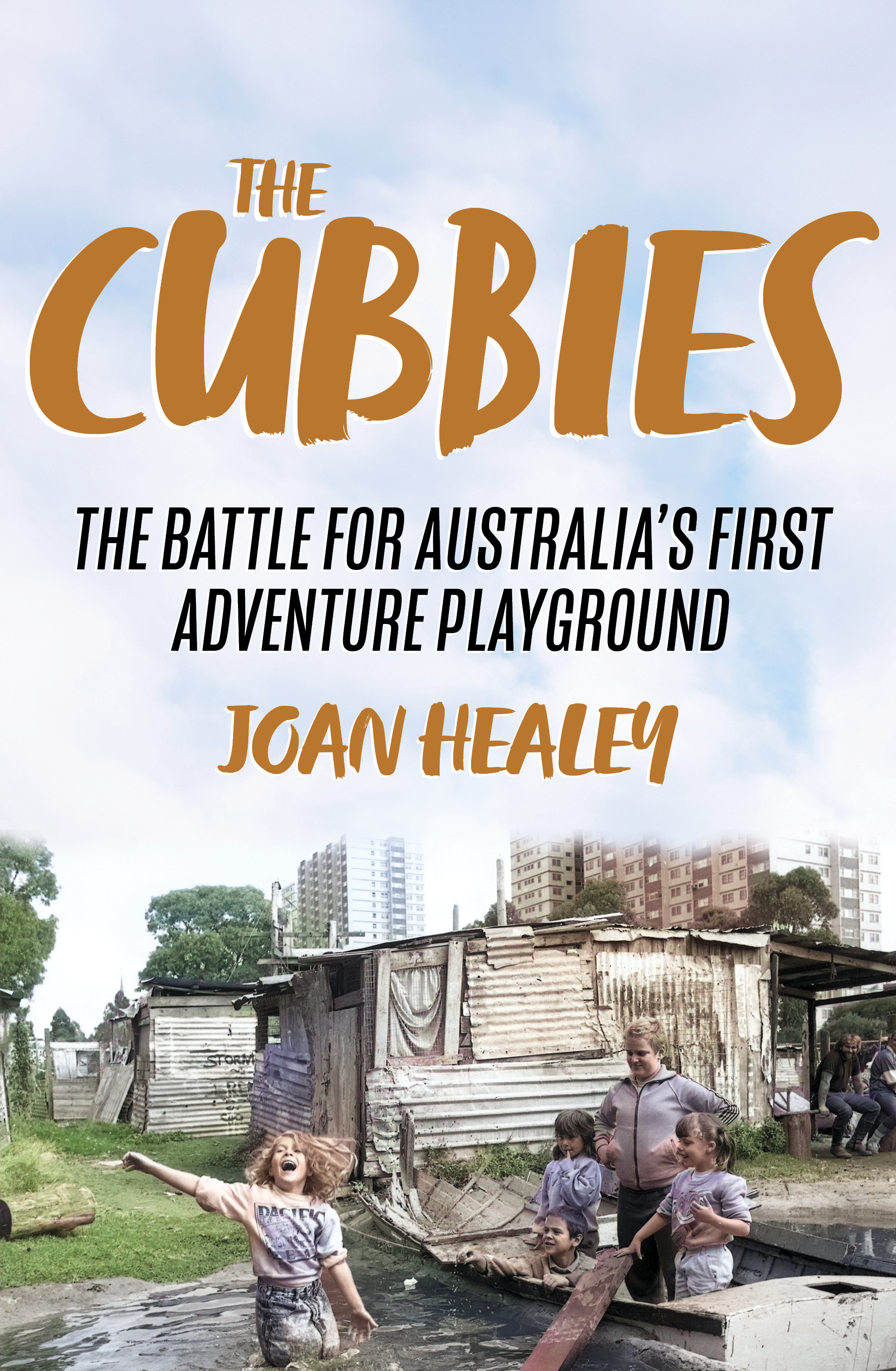
Sometimes it is really marvellous how things come your way. Just over a week ago I was writing some teaching notes for a forthcoming JF in which a cubby is featured, and, as is my wont, I was rootling around for info or inspo on cubbies and happened upon this brand-new title.
Of course, nothing at all to do with what I needed per se, but the blurb sounded so fascinating, I was bold enough to request it. I devoured it over 2 days and what an absolutely cracking read it is. Had someone said to me ‘adventure playground’ I’d be thinking of those we have in schools, or the new one at the Dolphins – logs, climbing things, nets etc.
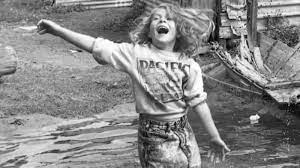
But this concept and the way it grew organically is just the most wonderful thing ever. Those kids who experienced the joy of building, mudding, cooking, climbing, caring for animals and all the other multiplicity of wondrous activities that arose from the Fitzroy playground must look back with such fond memories.
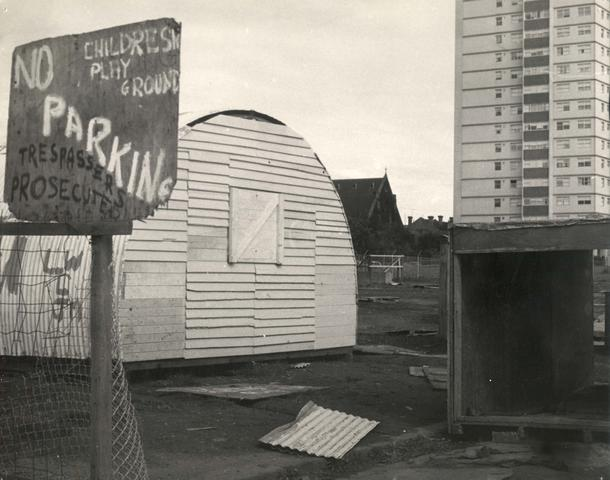
Joan Healey discovered the concept of (true) adventure playgrounds whilst working in England and on her return to Melbourne in the 70s thought this would be a perfect addition in Fitzroy where new towering and soulless low-cost housing units had been built. The thousands of children in these apartments had no backyards nor any space to play at all.
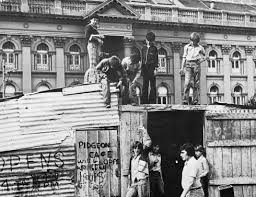
With a lot of chutzpah and a shoestring budget, Joan got this up and running and, despite many setbacks with funding not appearing and opposition from conservatives in the neighbourhood and problems with vandals, the playground eventually became not only a fixture in the neighbourhood but evolved into the heart of the neighbourhood.
The Cubbies became the model for similar ventures elsewhere and while it has been modified and moved away from its completely organic origins, it remains a vibrant, needful and much-loved fixture in Fitzroy.
As educators we try our hardest to encourage creative thinking, resilience, responsibility, consideration for others, cooperation and collaboration and risk-taking, and yet, at every turn, more and more this is thwarted by WHS and higher-ups who think they know what children need. It’s a dichotomy to do one’s head in!
The Fitzroy Cubbies, especially in the early days, proved that children can both be inventive and create their own safety nets. This wasn’t just a fascinating read. At times it was hilarious as Joan recounts conversations and attitudes from the rambunctious kids of the neighbourhood, most of them recently arrived immigrants forming a veritable melting pot of cultural diversity. Her descriptions of opposition e.g. the local priest and the mumsie women in charge of the neighbourhood creche are also hugely funny.
Although the Cubbies has now become more regulated, it was the inspiration for many other playgrounds far closer to the ideals of the original adventure playgrounds – and a far cry from the sterile green kopper log jobs so many bureaucrats think ‘adventure’ is!
From the first page to the last it was both a joy and an inspiration. I am very grateful to MUP for the opportunity to learn the Cubbies’ story as well as the tenacity of Joan and the others who fought to keep the playground going. You can see the playground as it is now here. What an absolutely serendipitous find this was! I’m giving it a HUGE 🏞️🏞️🏞️🏞️🏞️ (closest I could get !) rating for this terrific slice of history.

 Just So Stories
Leave a comment