


Please find some thoughts, resources and potential growth ideas sourced from some of my go-to First Nations educational providers.
Firstly from Deb Hoger @Riley Callie Resources
Every year, we like to remind people what this date actually marks. Let’s get the facts:
- January 26 1788 is the day Sir Arthur Phillip raised the British flag at Warrane (Sydney Cove) to claim the land as a British Colony. This day thus marks the beginning of a long and brutal (and ongoing) colonisation of people and country.
- This is why choosing this date as ‘Australia Day’ is controversial, painful and traumatic for First Nations people.
- January 26 wasn’t always a national holiday – It wasn’t until 1994 that this happened.
- Way back in 1888, on January 26, the centenary of British colonisation, First Nations leaders boycotted celebrations, but the protest went unreported and unnoticed by the wider community.
- On 26 January 1938, on the 150th anniversary of Arthur Phillip’s arrival, Yorta Yorta man William Cooper and other members of the Aboriginal Progressive Association held the Day of Mourning and Protest. Since this first Day of Mourning, First Nations people and allies continue to mark this day as Day of Mourning, Survival Day or Invasion Day.
Learn more about January 26 and the history via Common Ground.

Meanwhile check out the new planning tool which would be invaluable for any classroom or library:
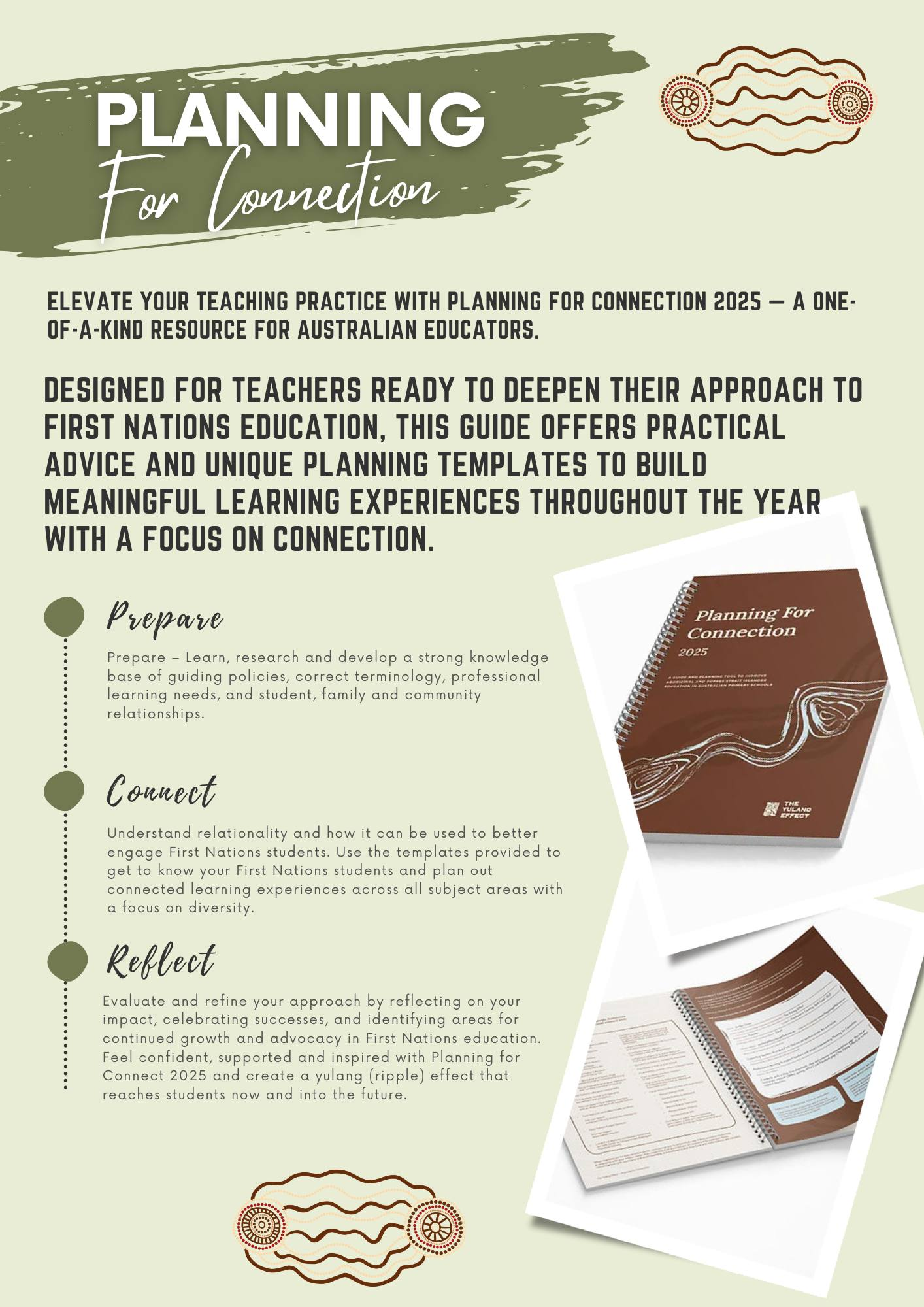
Teachers, if your New Year’s resolution is to make a bigger impact on supporting Indigenous perspectives into your schools, this book is for you!

Information about the most up-to-date preferred terminology
List of the national, state and territory First Nation education policies, strategies and frameworks
Brainstorming template and list of considerations for planning First Nations professional development
An example teacher professional development SMART goal for First Nations education
Suggestions for how to connect with Aboriginal and/or Torres Strait Islander community members and stakeholders
Example email to a local Aboriginal artist
Advice for establishing a strong First Nations education team and an example invite and agenda
A yearly planner for teachers to plan meetings and events around significant First Nations dates throughout the year
A First Nations education action list with suggestions to holistically improve First Nations education across the whole school
Insight into relationality from a First Nations perspective
An example Personalised Learning Pathway (PLP)
Four thought-provoking and unique templates to generate ideas and plan for connection across lessons and learning area
Three unique reflection and goal-setting templates that encourage effective teaching practices grounded in improvement, impact and growth
A list of useful First Nations websites and resources
A list of recommended First Nations businesses where teachers can purchase authentic educational resources from.
Be quick! Get your pre-order in here.
From Wingaru Education:

Our yearly wall planner runs from 1st January 2025 – 31st December 2025 and includes Aboriginal and Torres Strait Islander key dates and classroom inclusion ideas.
Printed in Australia on quality satin 170gsm, the A1 planner arrives folded and ready to hang.
Designed by Wingaru Education using artwork from Dunghutti Artist Aunty Cynthia O’Brien Younie, this vibrant planner is perfect for staff rooms, the classroom or common areas.
From Evolve Communities:
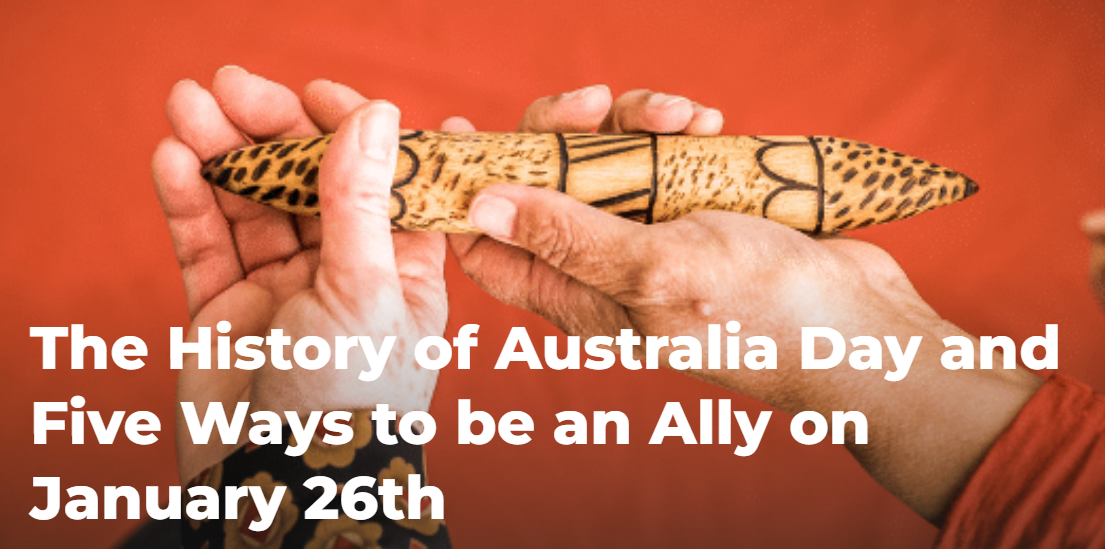
For Aboriginal and Torres Strait Islander people, and many other Australians, Australia Day is a day of great sorrow. We asked Evolve co-Directors, Aunty Munya Andrews and Carla Rogers, to share ideas for how we can support First Nations people on January 26th.
“Before we can go there, and talk about Australia Day, we need to understand what it is exactly,” says Carla Rogers.
She points us to an extract from her and Munya Andrews book, Practical Reconciliation, which reads:
“Australia Day marks the anniversary of the 1788 invasion of the First Fleet of British ships at Port Jackson, NSW, and the raising of the flag of Great Britain at Sydney Cove by Governor Arthur Phillip. Compared to 100,000 years of Aboriginal people living, loving and sharing this land with each other, the 230 years since invasion is minuscule.
It was less than 100 years ago in 1935 that all Australian states and territories adopted use of the term “Australia Day” to mark the date, and less than 30 years ago, in 1994 that the date was consistently marked by a public holiday on that day by all states and territories.”
“So just imagine that tomorrow we are invaded by another country,” proposes Carla, “and that they raise their flag, take possession of our homes, and throw us into purpose-built jails.”
“If that isn’t bad enough, imagine that years later your grandchildren and great-grandchildren are asked to celebrate that day as a national holiday. Unthinkable, really.”
Read more on the website.
- Find out the name of the Traditional Owners where you live and take time to acknowledge them: Learn how here
- Try to understand why an Aboriginal person might feel sad on Australia Day: Learn more here
- Consider working as usual and celebrating on a different date: Learn more here.
- Support a Survival Day event: Learn more here.
- As an act of Allyship, share this resource
From the Edmund Rice Centre:

For many Aboriginal and Torres Strait Islander people, 26 January is an opportunity to celebrate the survival of their culture and people. According to Tanya Denning-Orman, NITV Channel Manager: “Survival Day acknowledges the mixed nature of January 26. It recognises the invasion and our history, but invasion doesn’t frame us as a people. We are still here, our languages are still spoken and our cultures are strong.”
Here are five ways you can stand in solidarity with Indigenous Australians this Survival Day.
1. Understand and learn the truth about Australian history
“White Australia has a black history.” Some people might not be comfortable with that, but as a nation, we can only move forward if we are honest and mature about our history. There are some great online resources that highlight the truth, including:
- Here’s why Australia’s National Day of Celebration is a Day of Mourning for Indigenous People
- The Truth Collective
- Australia Day – Invasion Day
- Stories of Survival
- Colonial Frontier Massacres in Eastern Australia 1788-1872
2. Attend a Survival Day event
There are Survival Day and Invasion Day events across the country. Some of the main events are listed below and if you google “Invasion Day events” or “Survival Day events” you will be able to find an event near you.
Amnesty International Australia always puts together a list of Survival Day and Invasion Day events that are happening around the country. This guide can be found here.
3. Support Indigenous music
Tune into the live broadcast of music at the Yabun Festival on Koori Radio in Sydney (93.7FM) or stream it live here. You can also catch the top 100 Indigenous songs on 3KND in Melbourne (1503AM) or stream it live here.
If you’re organising an event, put together a playlist of songs that recognise the truth about 26 January. NITV has put together its Top 40 Survival Day playlist and has a Survival Day playlist on Spotify.
4. Share the truth on social media
Social media is a great way to show your network of family and friends that you are taking a stand in solidarity with Indigenous Australians. If you see an article, video or image about Invasion Day or Survival Day, post it and share it. We’ve been sharing Survival Day content on our Facebook page which you can check out here.
5. Promote Aboriginal and Torres Strait Islander voices
Australian politicians and the media are very good at talking about Aboriginal and Torres Strait Islander peoples, rather than listening. As a result, Aboriginal and Torres Strait Islander voices are often ignored, as evidenced by the Government’s decision to ignore the Uluru Statement.
The @IndigenousX twitter account is a platform for Indigenous people to share their knowledge, opinions and experiences.
6. Speak out, be active and be political
Ultimately, issues of inequality and injustice are political. Don’t leave it to others to take on the issues, as you may disagree with them as how to they do so. Make your thoughts, ideas and solutions heard politically. Organisations like the Edmund Rice Centre, ANTaR and Amnesty International can’t do the job alone.
“Once you see it, you can’t unsee it. And once you’ve seen it, keeping quiet, saying nothing, becomes as political an act as speaking out. There’s no innocence. Either way, you’re accountable.”
Arundhati Roy, Power Politics, 2001
Some ideas include contacting your local MP to demand they take action this year to support the Uluru Statement or calling on the Parliament to take action to reduce incarceration rates by signing our petition.
From the Guardian (2022)
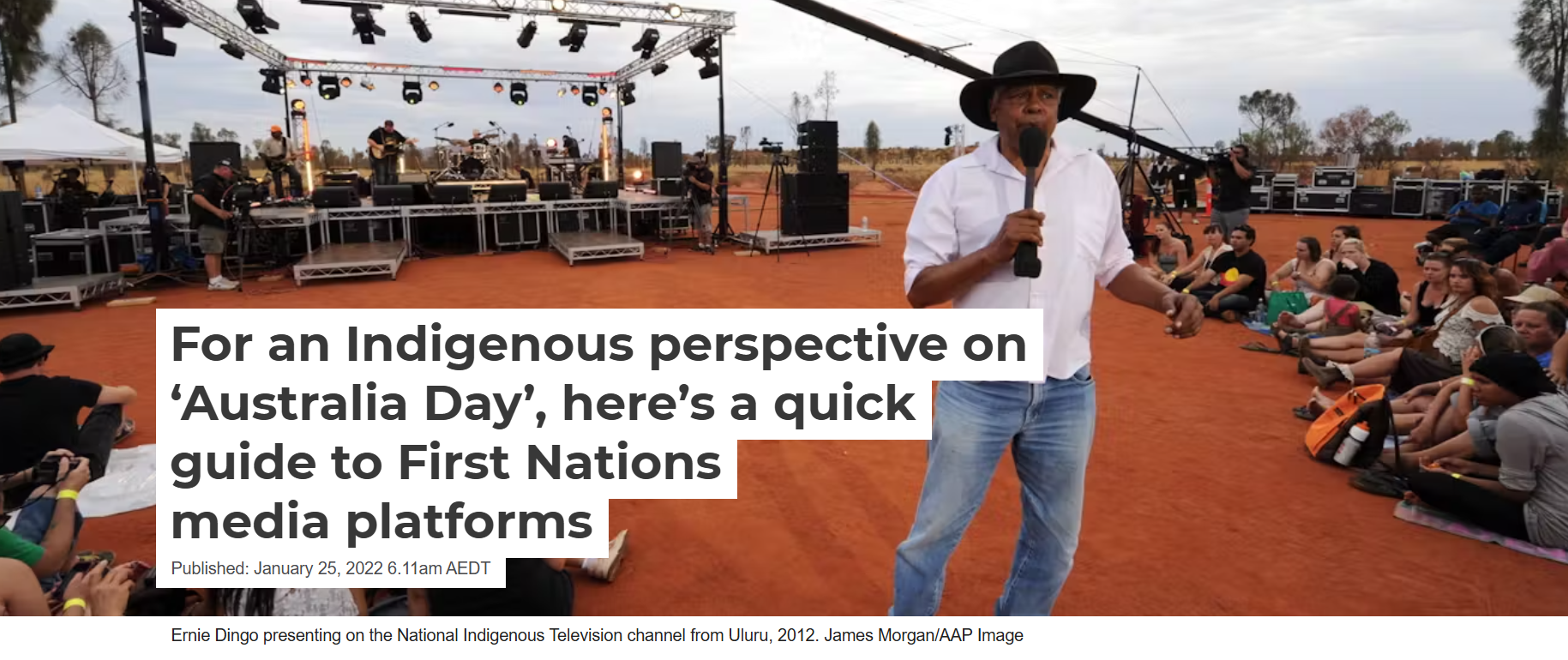
Perhaps this 26th January, you could plan ways to make your cross-cultural embedding of First Nations perspectives into your teaching framework, in meaningful ways. There are reviews of new First Nations titles coming up but do search the blog for some of the other wonderful books I’ve reviewed over the years.
From Genevieve Hopkins: The Wheel and the Cross. Podcast: Invasion Day: The uncomfortable truth about Australia Day


 Just So Stories
Leave a comment