


UNSW Press
9781742237503 / May 2025 / RRP $34.99
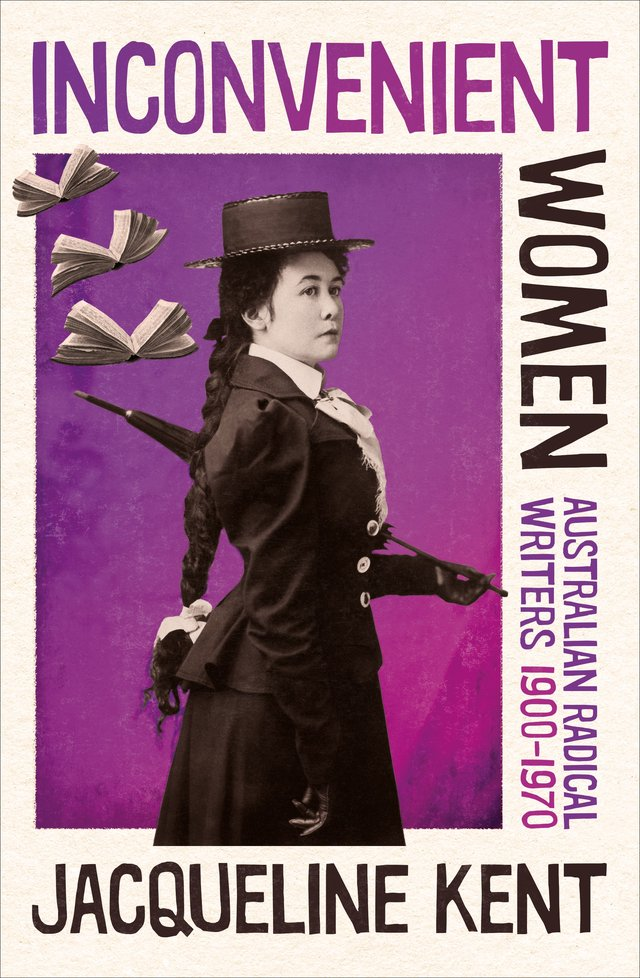
You might guess that long extended adult reads do not happen all that often for me. I’m generally so snowed under reading kids lit that squeezing in the adult books is a mission – and usually reserved for the days at the beach while The Kid surfs or my occasional blog breaks. So a book like this is perfect because one can dip in and out of it, as I have done over the past few weeks.
It is a collection of biographical vignettes of various women writers, some of whom we are probably aware but of others that I, certainly, have never heard. Put this in the perspective of the period when the sisterhood of suffragettes was campaigning in earnest, and the growing ‘liberation’ of women as two world wars, the Depression and the passing decades began to open up not only more opportunities for women but events and societal changes gave many a new-found courage to not only explore their own talents but to commercialise these.
I knew Mary Gilmore’s name and have read in the past some of her work but I didn’t realise she was such a ferociously staunch feminist and a Labour supporter when that was akin to radicalism. She wasn’t the only one pushing boundaries and elevating the writing of women.
Our history of this period of women’s writing is full of highly regarded creators who took writing to a new level of social commentary and, in some cases, provided the impetus for actual government action. For example, Ruth Park’s The Harp in the South – what an absolutely cracking read it is, paired with Poor Man’s Orange – was not only groundbreaking in its inclusion of topics such as abortion, sex before marriage, life in the Sydney slums in all their grimy and squalid conditions, but was the inspiration for the NSW government to instigate the slum ‘clearance’ program and elevate the standard of living for those in the lowest income brackets.
Names like Miles Franklin and Dymphna Cusack, Christina Stead and Oodgeroo Noonuccal are well known, along with their works but others were so relatively or completely new to me: Nettie Palmer [though, naturally, I know husband Vance’s name well!], Flora Eldershaw or Marie Pitt and many more.
A great number of these writers were quite prolific, critically successful and had good sales figures, all of which begs the question why are so many now lost in obscurity. And, even more importantly to my mind, why are our students, particularly seniors, still reading the works of dead white guys (often American or British) and these fine writers are ignored in our schools – unless there are schools using these writers in their English Lit programs? I’d love to hear of any that are.
If you have a strong interest in Australian literature and the history of it, and also, in particular, the achievements of some our trailblazing women of the 20th century, I would urge you to get hold of this.
I very much enjoyed my trawling through the pages, and have made notes of those works I’d like to read (when I have time!!). I am happily giving it a 4 ✍️✍️✍️✍️ for anyone interested in a scholarly work of this nature.
 Just So Stories
Leave a comment