


Thames & Hudson
2024/2025
ISBN: 9781760764500/ISBN: 9781760764524/ISBN: 9781760764517
RRP: $34.99


I have often mentioned that Small Person Me was a bit of a non-fiction nerdy kid and as such I had a passing interest in all sorts of topics. Most usually from my brother’s ‘general’ non-fiction books though I did have some of my own that were specific [still have several of each]. So this wondrous series would have been right up my alley and, no doubt, equally so for many of your readers.
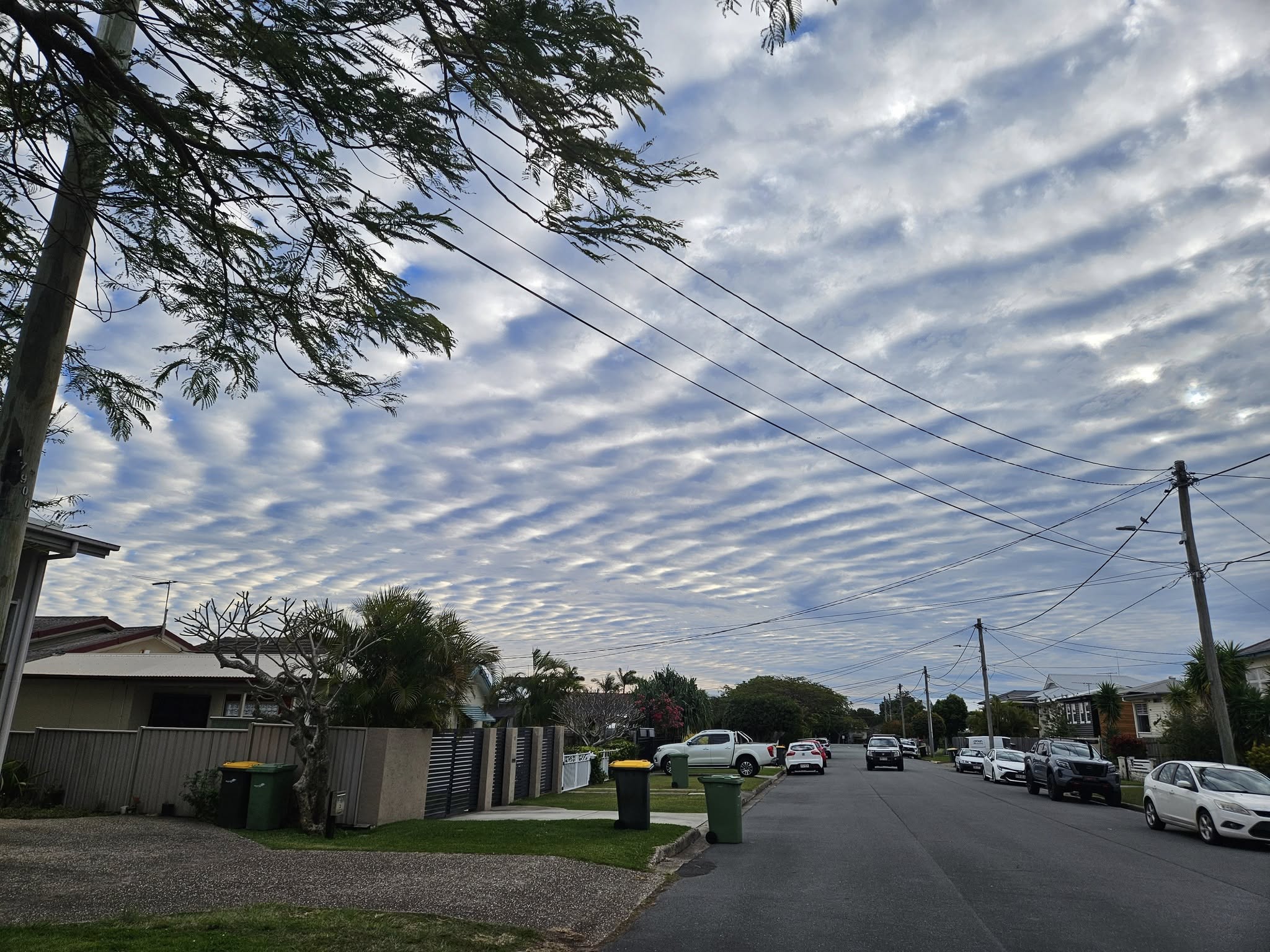
The first in the series, Clouds, was released last year and has come in really handy this evening [as I write this] to check the type of clouds I saw on my walk this afternoon. Most of the sky looked just plain overcast and threatening rain but away to the west were these.
I’m inclined to think after consulting the atlas, that they are definitely stratiformis but whether they are the cirrocumulus or altocumulus variety is a tough call for a novice. [Mr Surfer said he thinks they’re scallops. My reply was, well yes, they look them – not the edible kind but the pattern kind. But I’m not entirely sure where he’s getting his intel from] Your kiddos, however, will no doubt be gazing skywards regularly to identify each type and then, of course, expound on their knowledge [this last comment will apply to all three books I point out!].
Next up is Wave, which was released earlier this year. Of course, with two surfers in my immediate circle, this one was of particular interest for me.
Hmm, well in Redcliffe we call them the Reddy Ripples – pretty much “Very Low” by ID. But up the coast we usually have “Moderate” where The Kid surfs. No big gun swells for her!
This one includes how the oceans formed, tides, shoaling,currents, the Douglas Sea Scale and even, hilariously from my point of view, the wave type called “Confused” i.e. indeterminable length and height. Yep, if your kiddos don’t live alongside the sea, they’re going to be busting to get there just so they can identify types of waves!
Even more fascinating is the next title, Wind. I mean to say, how do you ‘illustrate’ wind in a book for a start? The stunning illustrations in this show readers the ways in which the winds blow, the Coriolos Force [yes, that was a new term for me as well], along with weather fronts. It introduces them to little Master Beaufort, who went to sea at 12 and conceived the notion of measuring wind speed and creating a scale, which we still use today.
Likewise “Mr Tornado”, Tetsuya Theodore (Ted) Fujita, created the Fujita scale which identifies the categories of tornadoes, which are then described in following pages. Prior to those wild winds, are those we quite like such as ‘gentle breeze’ or those we’re having at the moment [Ekka winds we call them in Queensland] a ‘strong breeze’, westerly, which is very cold.
I think your readers will be like me, and pore over each page with the descriptions and be ready – yes, time to repeat that same last line as per Clouds.
While the information is so well-written, clear and concise and the sections really good lengths for each double spread, excellent captions and diagrams, the illustrations are utterly fabulous. They are not just ‘factual’ but include nods to mythology or cultural references, such as the beautiful Japanese woman holding an origami dove for the spread about Mori Yuzan’s wave art on the “Very High” page.
Each one of these has divine endpapers, backmatter that includes more detailed facts or definitions, glossaries, notes and bibliography. All in all they make a valuable addition to your collection and I don’t think that’s confined to just primary kiddos. I can see these being equally useful for lower secondary at least for geography.
They are quite magnificent in all senses and I’m giving them a big 5 ☁️🌬️🌊🌬️☁️ rating. And then I will continue to enjoy them a while longer.
[***EDIT: Mr Surfer told me later that evening that he thinks he meant ‘mackerel’ not scallop and that Jenny on the ABC identified them as cirrocumulous]

 Just So Stories
Leave a comment