


UQP
December 2022
ISBN 978070226589
A$32.99
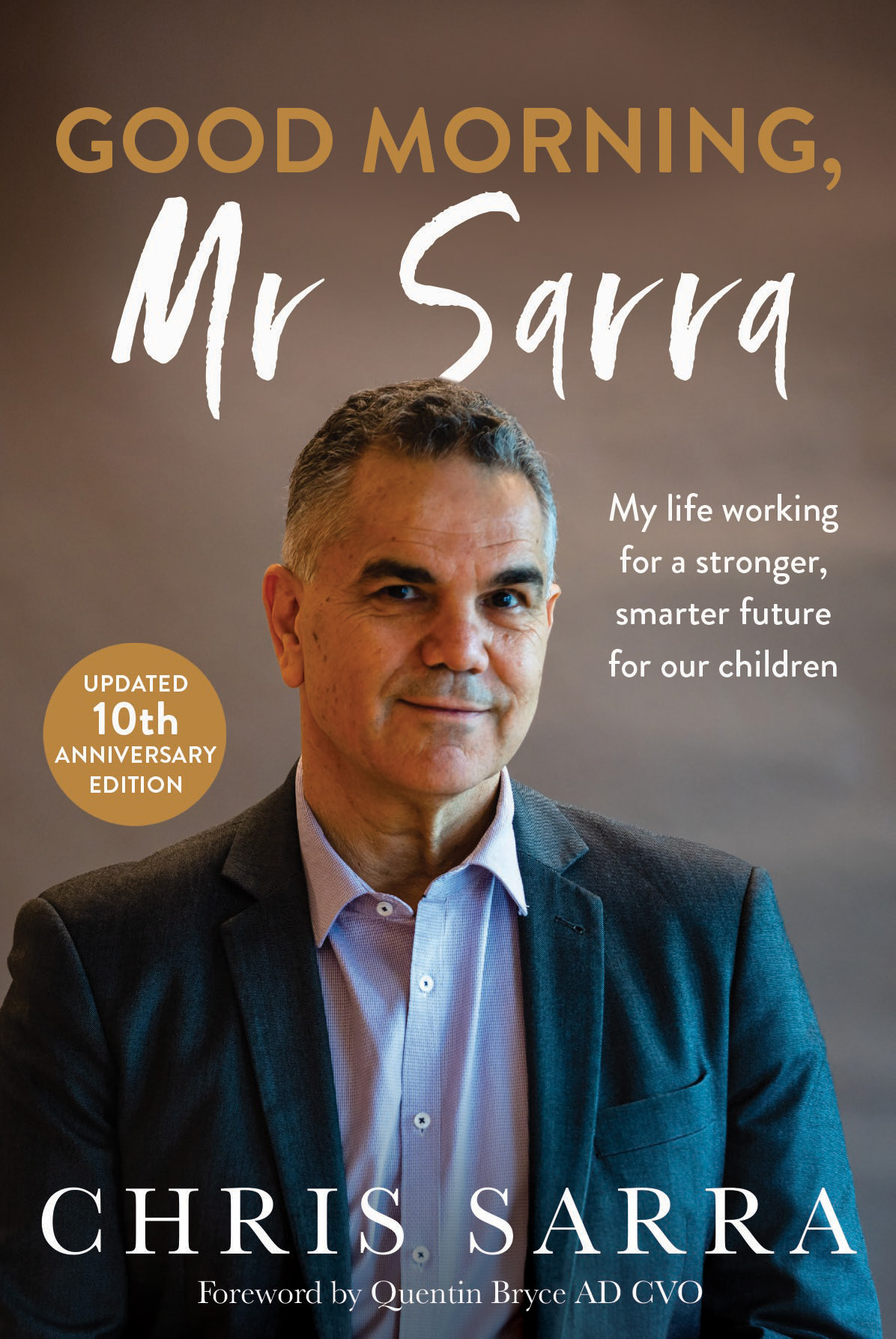
In mid-1998 I was in my last year at Nanango State School, then teacher-librarian and six years into my teaching career. That was also the year that Chris Sarra arrived at Cherbourg State School as Queensland’s first Aboriginal school principal. It was a game-changer not only for Cherbourg and the little fullas at that school but for the entire South Burnett region and, wider still, eventually across the nation as Chris’ initiatives at the school not only turned it around but led to the establishment of the Stronger Smarter Institute. I was only able to cross paths with Chris once and briefly [don’t even remember why I was at a PD at Cherbourg but possibly because I was always active if not alone, in the ATSI Committee for the school]but even into his short tenure at that stage, the remarkable difference in the chaos that had been Cherbourg SS, as visited a few years previously for a beginning teachers session, was utterly awe-inspiring and so heartening.
This is not a new book, it was first published in 2012, and even this edition is now a few years old but I had somehow missed it. When UQP very kindly sent it to me, I ate it up over 3 nights and remember all over again, how much learning I did myself in those six years at Nanango (which was also a pretty rough and ready school but with a good boss).
It also gives me pause for reflection on how much we i.e. the educators who are determined to lift our First Nations kiddos up and ‘close the gap’ in reality, admire the work of Chris Sarra and his ilk, and how many of us have strived to make a difference, although sadly so many have not, and indeed, still don’t.
Chris’ early life in Bundaberg, from my own knowledge and experience, would reflect that of many similar Aboriginal families of the time period, certainly the families of my kids’ cousins/aunts/uncles also in large regional cities or even smaller towns (though in Central West NSW).
And his experience at school was very typical given the recollections I have heard over the years, and knowing the similar experiences of nieces and nephews. They were not only dismissed as not being equal to the standards of their white counterparts but often actively discouraged from even attempting to reach those standards. And were openly shamed not just by other students but by teachers e.g. ‘Do you eat witchetty grubs at home?” “Of course, I wouldn’t expect someone from your family to have any respect.”
Chris’ intelligence and his ability to control his natural inclination to anger and channel that energy into achievement was the catalyst for his future career. So that not only did he outstrip many students from his same ‘pool’ (regardless of colour) but broke barriers all round. And then, he put that to the best use possible.
He knew that our First Nations students deserved better, were capable of everything that any other more privileged student was expected to achieve and knew that the way to do that was to empower the kids – but also to educate the adults. Just like me, over the years being shocked, disappointed and generally pissed off at the teacher-librarians who see their role as the escape from classroom and a soft option, Chris recognised the teachers who are the ‘coasters’, the ones who don’t put in the hard work, who don’t believe that kids of colour or low socio-economic backgrounds are every bit as capable if taught and led properly, who do not recognise trauma and racism as catalysts for behavioural issues and more.
I would honestly urge any educator to read this , and examine your own practice. In fact, I’d go further and say that instead of the many expensive and utterly useless (and unread) ‘professional texts’ various school admins have had me order in, for either admin team or whole school PL, this would be one book that I would insist my staff read. And then the next step would be to have them all undertake the Stronger Smarter programme.
#2, Aunty Kim, is now an accredited faciliator for Stronger Smarter, and has delivered the training to her own school. I asked her for some comments about what the programme delivers and what it has given her, and here’s what she had to say, as a passionate and dedicated Aboriginal educator (AEO) who cares deeply for her kids and her community. Also, I might add, just as Chris recounts how many of his capable Aboriginal aides and officers went on to become teachers, so too is Aunty Kim – and, at the persistent encouragement of her school principal who recognises her innate ability and gift for connecting with both kids and community, is starting her own teaching degree course.
The Stronger Smarter approach gives the First Nations kids the chance to not be ostracised, not excluded, but instead, it’s inclusive even in a predominantly white school. They are able see their culture as part of the school. It gave me the language and wording I needed to teach our own staff about generational trauma (often misunderstood) and gives teachers a framework for how to support, encourage and lift their Indigenous students. More than that, it benefits all kids because it empowers teachers to better differentiate their teaching style to support all students but particularly those at risk.
And certainly it encourages jarjums to aspire to more than being a sports person, not to take away from our First Nations athletic stars, but for too long that’s been the big ticket. That an Aboriginal person has ‘achieved’ because of their football/tennis/swimming/whatever achievements.
It means that instead of being left behind, First Nations kids can see themselves as being high achievers and gives them inspiration to chase their dreams and goals – that nothing is out of reach, if you are given the support you need as well as put the effort in.
Too often, even in the best of schools and settings, there has been the ‘accidental’ or unintentional racism [something Chris refers to often throughout the book]. People who would not consider themselves racist but unwittingly demonstrate it: by putting Aboriginal kids at the back of the room, by ‘oh this doesn’t mean you’ not expecting them to aim high etc. You can actually observe the difference in attitudes, goals and achievement in students once they get into the positive mindset the program gives them.
Kim recounts a prime example of when she and 3 white teachers from her school went to Dubbo [Dubbo! where we lived before moving to Queensland, with a high proportion of blak families] for one of their Stronger Smarter trainings. She and the others went to a local store to buy some breakfast supplies but couldn’t find what they wanted and as they were leaving, while the other women went ahead, Kim was stopped for a bag check – because she was the only obviously Aboriginal one (and proudly wearing her usual colours and clothing to acknowledge it). Thanks Aunty Kim for you comments!
Read the book, find out more about the Stronger Smarter Program and take time to spread the word, and walk the talk. Together we can make a difference and together we can walk towards a shared future.
Undisputed 5 ❤️💛🖤💛❤️rating and my fullest admiration for Dr Chris Sarra, proudly a Queenslander as well 🍍!
 Just So Stories
Leave a comment