

Harper Collins Australia
January 2024
- ISBN: 9781460716168
- ISBN 10: 1460716167
- Imprint: HarperCollins
- RRP: $12.99
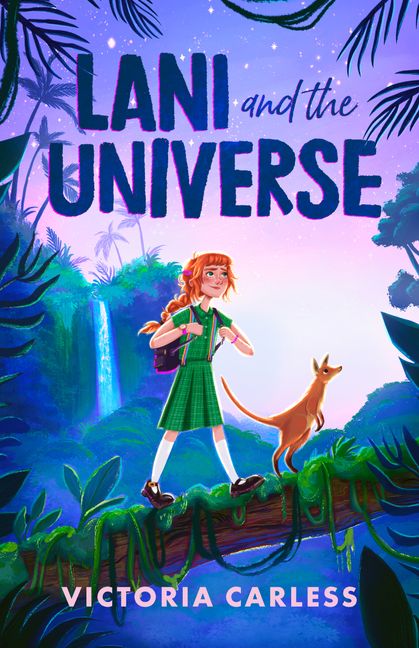
I really enjoyed Victoria’s earlier book, Gus and the Starlight, so the invitation to write teaching notes for this new one was a great pleasure, and, of course, gave me a very early read of another fresh, funny and poignant MG novel.
It’s been patiently awaiting review time for a couple of months now, and how choice it is to kick off a new year with such a great book – which is, ironically, about fresh starts.
Lani has her life all sorted, in her opinion. Sure, her father is always working, and so is her mother pretty much, but she’s got her bestie, Astrid, her satisfaction with school and her ambitions in astronomy, including the upcoming science competion. She’s also got her idol, famous scientist, Kit Galway, whose book is her constant companion, and, excitingly, will be the special judge of the science comp. Her mother’s fads are a slight worry, especially the ghastly backyard chickens but Lani can cope.
That is, she can cope until her mother announces they are going to a sustainable, self-sufficient, eco-community called Passing Waters, for an unspecified period of time to take stock of life, recharge, rediscover, and reconnect with each other and nature. It all sounds like a nightmare to Lani. And when they arrive, to mud, cobwebby cabin, next-to-no internet, actual animals and lots of buggy forest, Lani is even more convinced that the tree-change is actually an exercise in preparing for hell.
Nine-year-old Lentil does not seem to be at all phased by his own transplant from city to commune, and despite their seemingly vast differences, these two gradually build a rapport. Along with Meadow, resident cook and, also an astronomer, Lani learns a lot about herself, her life and authenticity. She also learns a great deal about standing up to bullies, having a voice and fighting for what you believe in.
This is full of humour (particularly the word play and double entendres), warmth and wonderful themes of family, friendship, authenticity/deception, resilience, making choices, accepting change and embracing new ideas. I loved it from the first page to the last and I know your readers from around Year 4 or 5 upwards to, easily, Year 7 will enjoy it just as much.
In my opinion, it would make a fantastic choice for a shared novel or novel study for your upper primary kids, with just so many rich discussions to be had, and so many cross-curricular perspectives to explore. Highly recommended for your readers from around 10 years on.
 Just So Stories
Leave a comment