

CSIRO Publishing
July 2025
ISBN: 9781486317547
RRP: $26.99
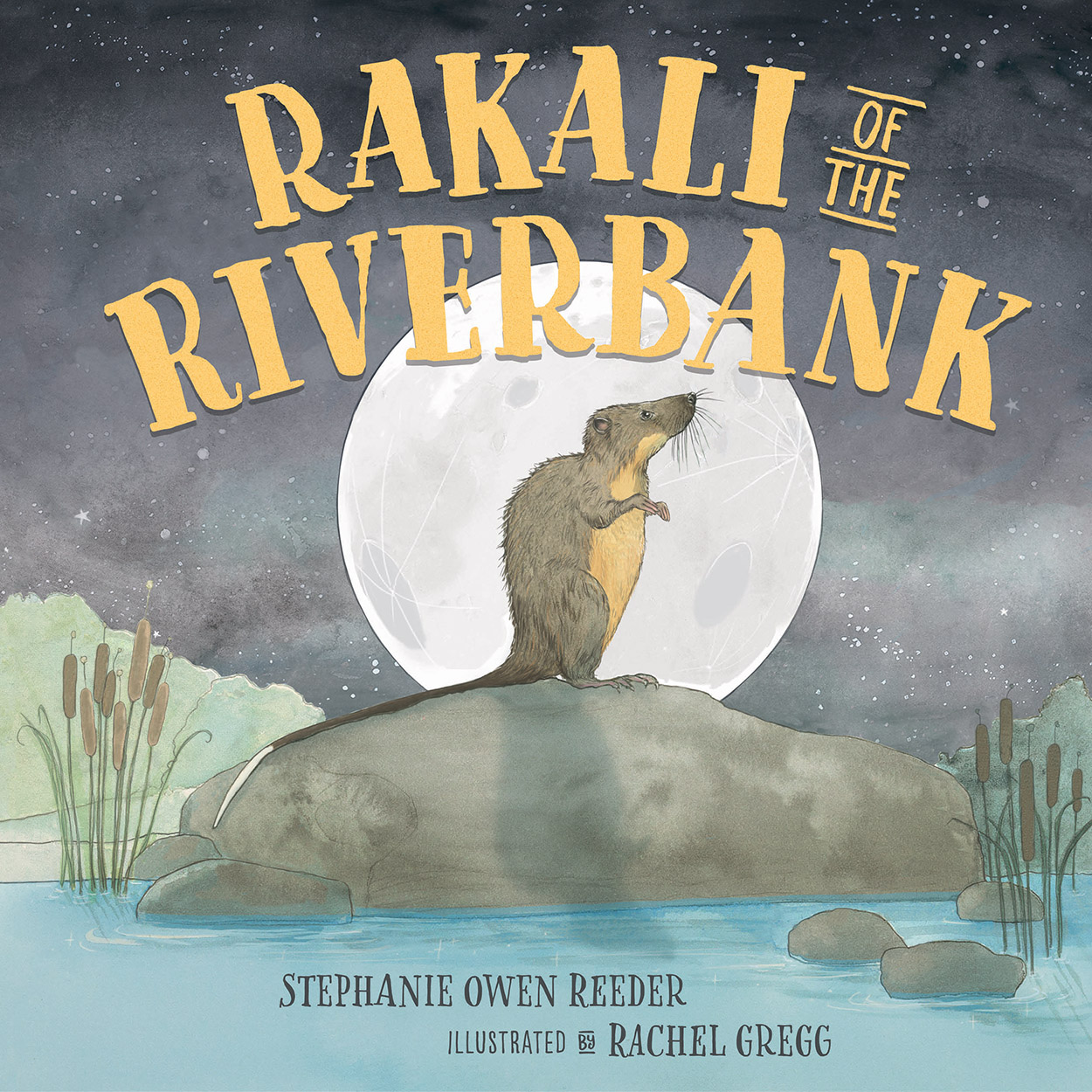
I’m well aware there are some people who are not fans of any kind of rodentia [inconceivable!] – honestly, I’m not sure why because not only do The Kid and I love them, but we find them absolutely fascinating creatures. I am yet to see a rakali for myself but I am always hopeful.
When I knew Stephanie Owen Reeder was working on this book, I was already anticipating its arrival, knowing how very well she works her narrative non-fiction with wildlife topics, in particular. This is, in fact, absolutely wonderful and with superb timing arrived in the same week as QCC shared their FB reel on the rakali making short work of a cane toad [thanks Cheryl Polonski, for bringing it to my attention. I had the pleasure of meeting both Stephanie and Cheryl F2F for the first time on my recent trip to Canberra].
The rakali is often referred to as the Australian otter, and if you know anything about those delightfully engaging creatures, you will know that their cute antics and faces belie their quite ferocious behaviours. Similarly, the rakali is ruthless when it comes to its prey and there is not a lot that will intimidate it, or best it. As readers will see in the book, the fox is one that is a danger. Humans are a big contender too, because so many don’t trouble themselves to know the difference between native rat species and introduced ones such as the black or brown rat.
Stephanie takes the reader on a ‘rakali patrol’ with this character, up and down, in and out of the water, as it catches prey, guards its pups and fends off intruders. Along the way she introduces subject specific vocabulary as well as much wonderfully expressive onamatopoeia, which your kiddos will enjoy.
Classroom studies on Australian animals always seem to settle on the usual suspects i.e. koalas, platypus, echidna, kangaroo. How much more interesting it would be to create a unit of inquiry that researches and celebrates some of our lesser known species. What a wonderful gallery walk or exhibition the results might make!
Alongside Stephanie’s wonderfully descriptive text are the illustrations from Rachel Gregg, using a highly attractive and appropriate palette of aquas, teals, blues and shades of brown, with realistic artwork that still has that picture book appeal for young readers – and glorious endpapers!
As one expects from both Stephanie and a CSIRO publication, there is valuable and informative backmatter including points of interest and a glossary. I particularly love the ‘fun fact’ of one Aboriginal Dreaming story describing the playtpus as the offspring of a rakali and a black duck!
This is another triumph for Stephanie Owen Reeder and, of course, CSIRO Publishing. Some teaching notes will help you to develop a UoI to capitalise on this absolutely beautiful book. All that remains now is for me to actually find a likely place to spot a rakali – although, finding the right emoji for the rating is going to be an issue too. The best I can do there is give a 5 point 🦦🐀🦦🐀🦦 rat/otter rating and you must imagine the result!
Watch this reel from Queensland Conservation Council to see the rakali wreak its havoc on a cane toad, just as is described in the book.
Changing attitudes towards the rakali, Australia’s version of the otter
The Australian Water Rat: A little known aquatic predator
Wildlife Preservation Society Qld: Rakali
 Just So Stories
Leave a comment