

Boolarong Press
October 2025
Imprint: Watson Ferguson Publishing
ISBN: 9780645504644
RRP: $24.99
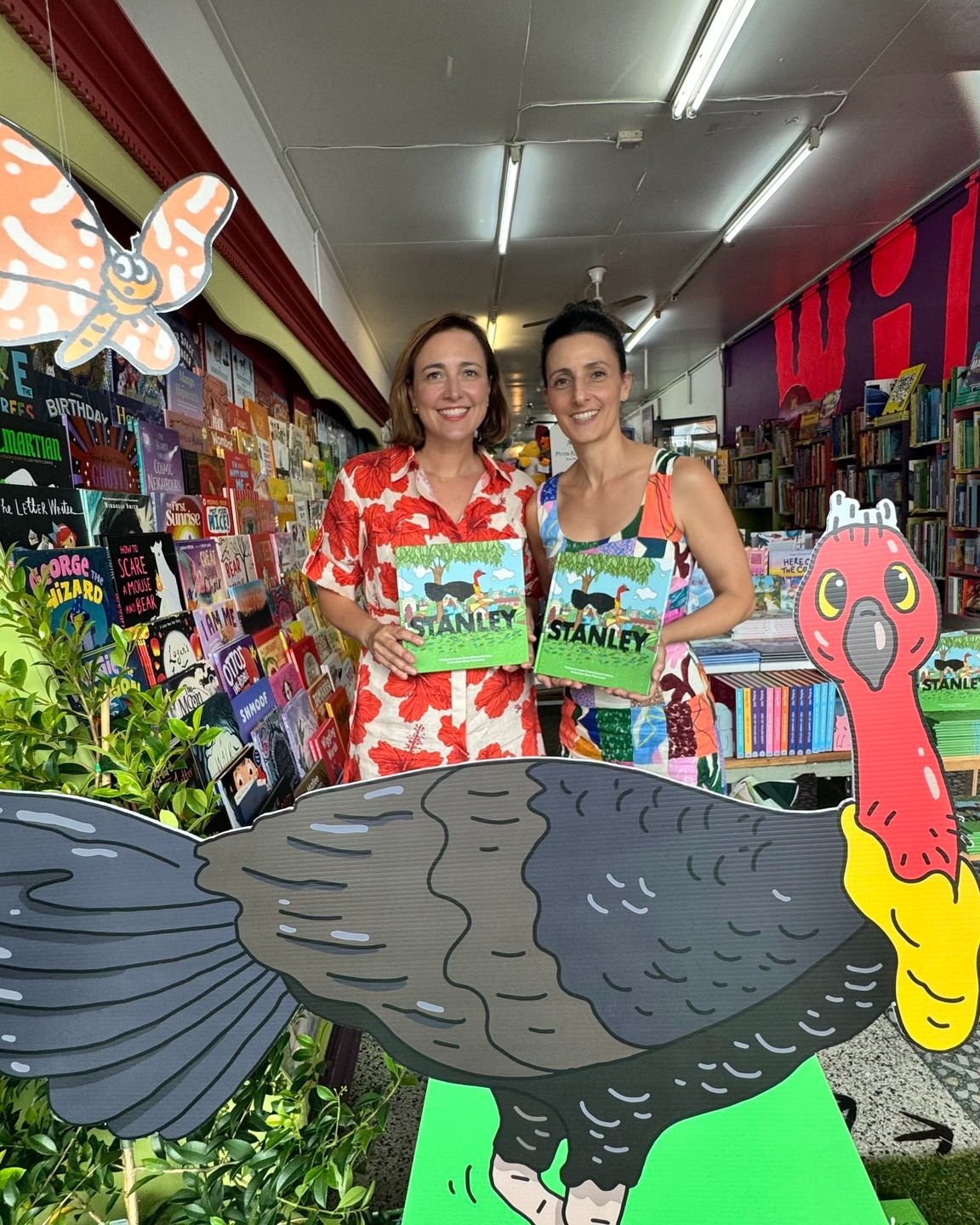
The ubiquitous and much-maligned brush turkey – bush turkey, scrub turkey, whatever your preferred terminology is certainly a character. We have plenty around here, including my regular I see on my morning walk, who has built a glorious mound in the scrub down by the beach, as well as the occasional visitor to our yard and fence.
We love seeing them, despite their funny appearance and obsessive digging, scraping, scratching, destruction of gardens. However, not everyone wants a pile of leaves, vegetation and dirt, the footprint of an elephant, and the volume of a VW beetle in their yard.
I don’t know about other states but in Queensland it is actually against the law to destroy a bush turkey’s active mound, even if it is in your precious manicured front lawn.
Poor Stanley is in just such a predicament as he gets hounded from one possible spot to another with everyone shouting out him, “Arrgghh. You Pest! Get out of here!” until at last he finds a quiet spot on a hilltop, away from backyards, under a shady mango tree.
With the fierce intensity only a male bush turkey can exhibit, he scratches, digs, heaps, and piles an extravagantly sized mound just ready for all those lady bush turkeys to come and lay their eggs. Yes, I have seen a couple of females digging themselves an egg hollow in the mound near us, but not yet I have seen any little brown fluffballs as a result, so I’m not sure what has happened there.
Of course, these chicks are on their own from day dot so not many of them make it. Indeed, just last weekend [as of writing] we were up at one of our favourite beaches for The Kid to surf, and a mid-sized goanna [just like the one in the illustration about predators] came hurtling out of the bush at the side of the beach path and grabbed a chick before anyone had a chance to say ‘Arrgghh!’. It was quite the Attenborough moment.
It’s a tough start for these babies, and the very reason that females will lay up to 50 eggs each season. The text from this pair of sisters is entertaining and engaging, and the illustrations, while cartoon style, accurately represent all the animals included, especially Stanley.
This terrific little book is a great introduction to these rather oddball birds and their habits, and the back matter has some specific information for little learners. I think any little readers from around 3 years right up to 8 or 9 will enjoy this and, of course, for those older kiddos a charming springboard into some inquiry into urban wildlife. I’m giving it a scraping, scratching, digging, heaping 4 🥚🥚🥚🥚rating.


Leave a Reply