

New South Books
Publisher: NLA
9781922507785
February 2026
AUD$24.99, NZD$29.99
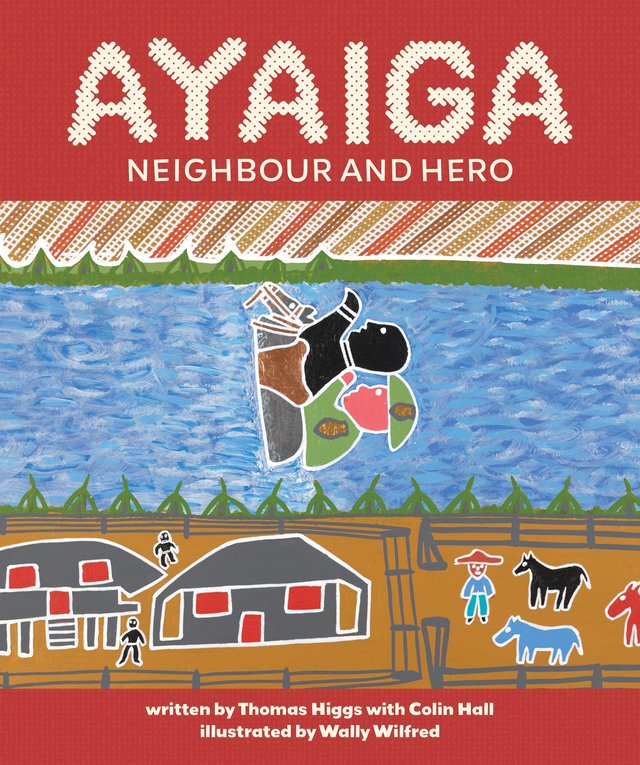
What an amazing episode from history this is and certainly one I’ve not heard of previously. It makes me wonder how many other little-known Aboriginal heroes are in our history. And how wonderful it is that this book brings this particular story to the attention of our young (and older!) readers.
Ayaiga was a young man of our Far North, in the Roper River region. Since childhood he had watched the white people taking over more and more of his tribe’s Country. Their ways were so different and they had no respect for the Country or for the people who were the traditional owners. They brought fences and houses and beasts. They cut off access to foods and water and space to the Aboriginal people. They were cruel often and punished the Aboriginal people in their own ways.
So one time when food was scarce and Ayaiga dared to kill a bullock for his mob to share, it wasn’t long before the whitefella law caught up with him. A young constable named Johns was detailed to apprehend him and take him for court and sentencing. But in this ignorant man’s over-confidence he took them through a flooding river, despite Ayaiga doing his best to dissuade him with no common language.
When Johns’ horse was washed over and knocked him on the head on its way, it was down to Ayaiga to save him. Of course, he didn’t need to but he couldn’t let the man drown. That would be wrong. He even managed to rescue the horse!
When it came to court, Johns spoke up for Ayaiga, who he now called Neighbour, and from then on, the Aboriginal man became not only well-known but a help to Johns in his tracking and police work when needed. The fame of Ayaiga reached even the King who decreed he should be awarded the Albert Medal for Gallantry, becoming the only Aboriginal recipient of this honour.
It speaks volumes really that Ayaiga, although transported to Port Darwin for the medal ceremony, was dressed for it in whitefella police clothes and even shoes and was not even able to take his own medal back to his homeland. It is a great story but also an infuriating one as we perceive the bigotry and injustices imposed upon Ayaiga and his people, indeed all our First Nations people.
And the back matter goes further with the information that Johns fathered numerous children with Aboriginal women whenever he was in the district, some of whom ended up as Stolen Generation ‘half-castes’, despite him having a family back home in South Australia.
The text is written with many words in language included, and a useful glossary for these as well as the input from descendants of both the main characters in the history. The original artwork by Roper River resident, Wally Wilfred, is interspersed with relevant historical photographs of the district and mentioned places, as well as Agaiya’s medal.
All in all, this really is an important addition to your studies for either primary readers or secondary students as it examines these aspects from a point of view not normally re-told. It’s a first-class history and while so much of it makes me sad and angry, it is also a timely reminder that compassion and empathy is a universal human trait – even if ignored by some. It’s a 5 🪃🖤💛❤️🧔🏾♂️ rating from me and be prepared for some lively discussions on injustices following reading!


Leave a Reply