

Lantana
Distributed by Simon & Schuster
May 2026
- ISBN-10 : 1915244803
- ISBN-13 :
LIST PRICE: AU$ 24.99 / NZ$ 28.99
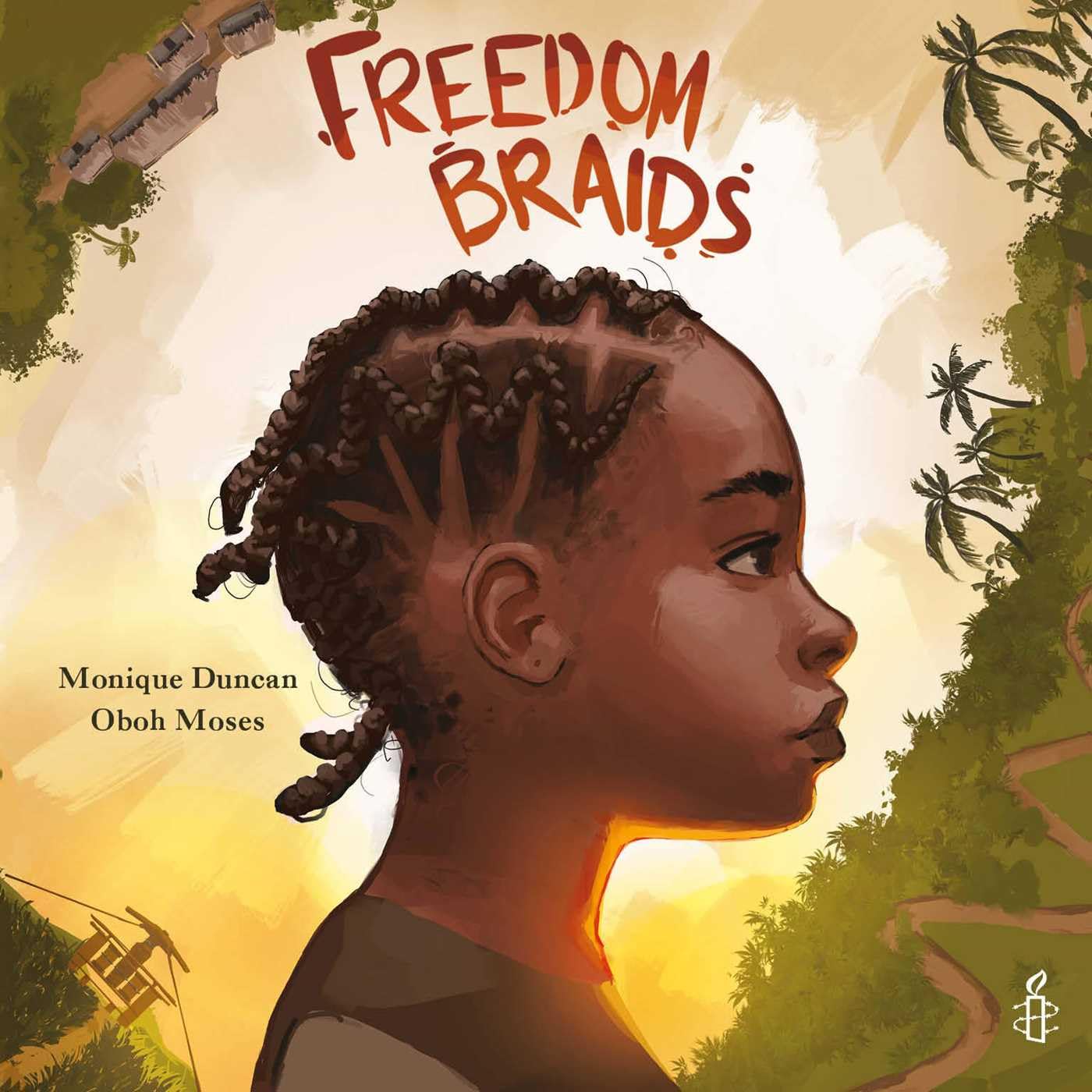
While I make a point of sharing own our Blak kids lit books and creators, it is always important to remember the struggles of PoC from other settings and cultures. This is a particularly beautiful picture book which relates an important though possibly not so well known slice of history.
Back in the 1500s the Spanish invaders began importing black Africans to Colombia (as well as other Latin American countries) beginning 300 years of enslavement. These slaves were used in gold and emerald mines, on sugar plantations as well as in domestic service. It is estimated that more than 250, 000 Africans were forcibly transported and trapped in servitude.
Yet many were resilient and especially the women who braided the cornrow styles that have become a fashion statement but which were originally conceived as maps of escape routes. This book lays out that history in terms that children can readily absorb and with which they will be quite intrigued.
Nemy is put to work each day sowing seeds for long hours with little respite and little hope of any other kind of life. Until, one night, she follows Big Mama and finds a group of women – sisters, aunties, grandmothers, mothers, friends – all braiding each other’s hair. These braids are elaborate and all different, many of them with unusual patterns.
This is no ordinary ‘hair styling’. It is, in fact, a secret guide to finding paths to freedrom through the jungle and the vast landscapes that surround the slaves’ compounds. By stealth, many of these women risked their own safety to watch, observe and even follow their white oppressors to ascertain routes that will lead them away from enslavement. These paths were then woven into braids and, when the time was ripe, the women would lead escapes to safety.
Many of these escaped slaves set up their own autonomous communities deep in the jungle, hidden from white eyes. These settlements were called palenques and the most famous San Basilio de Palenque, founded in the 1600s is recognised as the first free Black town in the Americas. How brave and how creative were these women to devise such plans! The human spirit truly can be so astonishing as we observe history (and much of that is still needed today as we all face uncertain times).
Recently, I have been reminded of the power of picture books to illustrate history in ways that are not only meaningful for younger readers but can soften the harsh reality of the events related e.g. Marcel Marceau’s life.
While the history of slavery especially in South America is not one to which many of our readers can make connections as such, how very important it is for us to empower them with stories of courage, spirit, determination and resilience, especially when that comes in the face of ruthless and cruel oppression.
I had heard references to this book and when given the opportunity to read and review I leapt at it, and am so glad that I did. Monique Duncan’s text is emotive without being confronting and succinctly relates the history while the stunning illustrations from Oboh Moses capture the essence of these heroic women and girls.
This is a book that truly deserves a place on any bookshelf be it library, classroom or home and one that will sit equally with younger students as well as serving as an introduction to this topic for older readers. 5 👧🏿👧🏿👧🏿👧🏿👧🏿rating for readers from around Year 2 upwards.
Read More:
Specific braiding techniques were used to convey particular messages or paths:
- Departes: Braids used to signal that someone was planning to escape.
- Curved Braids: Intentionally curved patterns representing the exact escape roads and pathways.
- Tropas: Very thick braids worn to indicate that soldiers were on the escape route.
- Bantu Knots: Used to represent the mountains enslaved people needed to cross
How Africans In Colombia Used Their Hair To Find Freedom

In the time of slavery in Colombia, hair braiding was used to relay messages. For example, to signal that they wanted to escape, women would braid a hairstyle called departes. And another style had curved braids where the curved braids would represent the roads they would use to escape.


Leave a comment